Are CBD creams legal in the UK? The cosmetics rules, THC, advertising and what is still unclear
A CBD cream is a cosmetic, not a food, and different rules apply. We set out what the official sources say about CBD topicals in Great Britain, where each statement comes from, and the points the sources leave open.
Ad. This page has links to shops that pay us a commission if you buy. It does not change the order: products are sorted by price per mg. More on how we earn
On this page (9 parts)
- The short answer, and why it is not one word
- A cream is a cosmetic, not a food
- What the cosmetics rules ask of a brand
- Northern Ireland
- THC, and the Misuse of Drugs Act
- What the sources leave open
- Advertising: why this site avoids certain words
- Reviews, prices and promotion: the 2024 consumer law
- What I would check before buying a CBD cream
The question I get most from clients about CBD creams is not about the cream. It is, quietly, over the shampoo basin: "Is that even allowed?" People are not sure whether they are buying something ordinary or something that might get them into trouble, and the shop shelves do not help, because a pot of CBD cream looks like any other pot of cream.
I am a hairdresser and not a lawyer, so I have done what I do with a product label and read the source. This page sets out what the official sources say about CBD creams, balms and lotions in Great Britain, where each statement comes from, and where the sources go quiet. I read them on 22 November 2026, and the main drug-law sources on 18 November 2026. It is an editor's reading with links, not legal advice. If you run a business or you have a specific problem, speak to a solicitor or to Trading Standards.
The short answer, and why it is not one word
The short answer is that CBD creams are on sale in Great Britain as cosmetics, and a cosmetic has a set of obligations: a responsible person in the UK, a notification before sale, a proper ingredient list, and claims that are honest and supported. A cream that meets them is sold in the ordinary way, and that is how the shops on this site list their products.
The reason I do not give you one word, "legal", is that I cannot find a source that says it. We checked the official pages on cosmetics, on drugs and on advertising, and none of them states, in a sentence, that CBD in a cosmetic is permitted. What they do is set out rules that a CBD cream has to meet, and leave a few questions open. We follow the practical rule that comes out of that: we never describe a cosmetic as legal, permitted, approved or authorised, and we tell you which questions are open.
A cream is a cosmetic, not a food
This is the point that trips up most shoppers. The Food Standards Agency has a list of CBD food products, and rules on CBD as a novel food. They are about things you swallow. The cosmetics regulation defines a cosmetic as a product for the external parts of the body, or the teeth and the mouth's lining, to clean, perfume, change the appearance, protect, keep in good condition or correct body odours, and says that a substance intended to be swallowed, inhaled, injected or implanted is not a cosmetic. That definition is quoted in the MHRA's guidance note 8 on what counts as a medicinal product, and the GOV.UK guide to making cosmetic products available is the working guide.
You sometimes see a CBD cream page that carries a note quoting the FSA's daily intake advice. That note is about CBD taken as food. It does not mean the cream is on the list, and it is not a rule for creams. We saw exactly this on one high street cream page, and we describe it in our page on CBD creams at Holland and Barrett, Boots and Superdrug.
This site does not cover oils to swallow, gummies or capsules, which fall under a different rule (the FSA list) and which we do not compare.
What the cosmetics rules ask of a brand
For a cosmetic put on sale in Great Britain, the main rules are the Cosmetic Products Regulation as it was retained after Brexit and amended for British use. Four of its requirements matter to a shopper.
A responsible person in the UK
Article 4 says a cosmetic can only be placed on the market if there is a responsible person established in the UK. A maker outside the UK has to appoint one in writing, and an importer becomes the responsible person unless another is named. GOV.UK's guidance adds that a UK address does not include a mail-forwarding address or a PO box. The practical test for a shopper is to look for that name and address on the pack.
A notification before sale
Article 13 requires the responsible person to notify the product to the authorities electronically before it goes on sale, with the product category and name, the person's details, the address of the product file and similar information. The GOV.UK page on submitting a cosmetic product notification describes the service, called SCPN. The same page says the search side is intended for use only by competent authorities, so you cannot look a product up yourself. And the guidance does not say what a notification proves. My reading, which is an inference and not a quoted sentence, is that it is a duty to inform the authority and not an approval. That is why we never write "notified" next to a product unless the brand has told us so in writing, and never write "approved" or "registered as safe".
A safety assessment and a product file
The same GOV.UK guidance says the responsible person must hold a safety report and a product information file, kept in English and available to the authorities. The shopper does not see it. It is one more reason to ask a brand questions, and a reasonable brand will answer.
An honest label
Article 19 sets the labelling: the ingredient list in descending order of weight, with ingredients below 1 percent in any order after the others, plus the responsible person's name and address and, for imports, the country of origin. Article 20 says that texts, names, images and marks must not suggest characteristics or functions a product does not have, and it makes the common criteria for claims binding. Our guide to reading CBD skincare ingredients goes through the list rule with real labels.
Northern Ireland
The rules above are for Great Britain: England, Scotland and Wales. GOV.UK's guidance says that for Northern Ireland the responsible person must be established in Northern Ireland or the EU, and that a separate process applies, and the MHRA's guidance says that cosmetics placed on the market in Northern Ireland are covered by the EU regulation. Our pages apply to Great Britain. If you are in Northern Ireland, the rules are not the ones described here, and some shops do not deliver there (one high street shop page I read says plainly that the product is not sold to Northern Ireland, Jersey or Guernsey).
THC, and the Misuse of Drugs Act
CBD is only part of the story, because the cannabis plant also makes THC, which is a controlled drug. The relevant sources are in the drug law, not the cosmetics law.
The Home Office's factsheet says that CBD as an isolated substance, in its pure form, is not controlled under the Misuse of Drugs Act 1971, and that it is highly likely that CBD products will contain controlled cannabinoids such as THC. The Act lists cannabinol and cannabis in Schedule 2 as Class B drugs. The Misuse of Drugs Regulations 2001 contain an exemption: a product containing a controlled drug is exempt if it meets three conditions, and one of them is that no one component part of the product contains more than 1 milligram of the controlled drug (regulation 2). The factsheet adds that the measure is the container, and that proof comes from analysis by an accredited laboratory (Home Office drug licensing factsheet).
What that means for a cream in practice is that the brand should be able to show a lab report for the product that lists THC. We ask brands for it and we do not list a brand that cannot supply one. That does not turn the ingredient list into a THC statement: nothing on a cosmetic ingredient list says how much THC the product contains.
What the sources leave open
This is the section that most pages on this subject skip, so I have given it room.
The cosmetics regulation has a list of substances that cannot be used in cosmetics, in annex II. One entry, number 306, covers "narcotics, natural and synthetic", meaning all substances listed in the first two tables of the 1961 UN single convention on narcotic drugs. We read the whole annex and found no other entry that names cannabis, cannabinoids or cannabidiol. GOV.UK's guidance on cosmetics does not mention narcotics or cannabis at all.
So here is what we do not know. No official UK page we read says whether CBD taken from the flower or resin of the plant is allowed in a cosmetic, or only CBD from other sources such as the leaf, seeds or synthesis. The distinction is discussed in secondary sources, including a law-firm article from 2021 that presents one view, and in European material that does not apply in Great Britain, but we found no British official statement settling it. We also could not check the sources that would help, such as the industry guidance on cannabis in cosmetics, which refused access when we asked for it.
The practical effect for a shopper is that "is it allowed?" is not a question this site can answer with a yes. What you can do is ask the brand where its CBD comes from (isolate, synthetic or an extract, and from which part of the plant), for the lab report, and for confirmation that the product is notified. It is the reason we say "the brand states" and not "it is".
The same caution applies to a few smaller points. We do not know, because no page we read says, what exactly a notification proves. We do not know whether a house rating by an editorial team counts as consumer review information under the new fake-reviews guidance, so we present any rating as the team's own and we have no star ratings on this site. And we have not read the local rules that Trading Standards teams apply. Where a question is open, I would rather you hear it from us than from a pot.
Advertising: why this site avoids certain words
The second set of rules is about what a seller can say. In the UK, the advertising codes are written by CAP and enforced by the Advertising Standards Authority. For cosmetics, section 12 of the CAP Code says that objective claims need evidence, that a cosmetic may make a limited, preventive secondary claim but not a claim about a disease, and that for a product used with massage, the effect of the massage must be told apart from the effect of the formula. Rule 12.11 is the one that bites: a product that makes a medicinal claim needs a marketing authorisation, which a cream does not have.
The MHRA's position is in the same direction. Its statement on CBD products says that products containing CBD used for medical purposes are medicines. Its guidance note adds that a claim about preventing or dealing with a skin condition turns a cosmetic into a medicine, and that it can look at the whole presentation, including testimonials published on a site.
The ASA has ruled on CBD skincare. In its ruling on Legacy 369 Ltd of 26 April 2023, it upheld a complaint about a social media post for a CBD balm that referred to targeting areas of discomfort. The ASA accepted that a balm can be applied to a part of the body, but read the wording as a promise of an effect on the body, which is a medicinal claim. It found that a note on the seller's site saying the products were not meant to deal with any condition did not change that impression, and that studies cited close to the products led people to read the studies' subject matter as the properties of the products. Another ASA decision, on a different CBD seller, found that advertorials on an affiliate-run site that said only "Promoted by" did not make clear that they were adverts.
The ASA's advice page on CBD containing products is written mainly about products taken by mouth, and it does not deal with creams. Applying its vocabulary rule to skin is therefore an extension, and we flag it as such. But it is a cautious extension. The advice says that words about curing, restoring, preventing, avoiding or fighting a condition are likely to be considered medicinal.
That is why this site does not use certain words, and why some of the pages you may have seen elsewhere read so differently. We do not write about discomfort in the body, joints, skin conditions, muscles feeling better, rest, mood or stress. We do not cite studies about CBD. We do not publish testimonials, because the MHRA reads them as claims. We do not say a cream "works". And a disclaimer does not do the job for us, because the Legacy 369 ruling says it does not. What we do write about is the pot, the stated mg, the ingredient list, the scent named on the label and the price.
It can make for plainer pages. I think that is the correct trade. If a shop page uses wording we leave out, you will see only a neutral name on ours, and, on pages where the brand's text has such wording, a line saying that brand pages sometimes use wording we don't repeat here, and that we stick to the label, the mg and the price.
Reviews, prices and promotion: the 2024 consumer law
A comparison site is also a seller of attention, and the Digital Markets, Competition and Consumers Act 2024 covers that. The relevant parts, from Schedule 20 and section 230, are these.
- Fake reviews are banned. Schedule 20 lists, among its banned practices, submitting or publishing fake reviews, or hiding that a review was incentivised. The CMA's guidance on fake reviews covers consumer review information such as star ratings and review counts. We publish no customer reviews and no star ratings.
- Paid editorial content must be flagged. Schedule 20 bans using editorial content to promote a product without making clear that it is paid for. That is why every page of ours carries an advertising notice before the first link, and why the cards for partner shops are marked "Ad". We say that we earn a commission on sales made through links on this page, and we say it plainly, not as "may earn".
- The total price must be shown. Section 230 says an invitation to buy that leaves out the total price, including fees and charges, is a misleading omission. We show the price read on a date, say that delivery may be extra and give each shop's delivery terms. The CMA's guidance on price transparency adds that mandatory charges must be part of the price shown.
- No false urgency. Schedule 20 bans falsely saying a product will be available only for a limited time. We run no countdowns and state no deadline we have not seen on the shop's own page.
I should be honest about the edge of that. We found no page that says in so many words that an affiliate site is making an "invitation to purchase" under section 230, though the CMA's guidance names price comparison sites among the operators it covers. We have chosen to behave as if we are covered. It costs nothing, and it is how we would want a comparison site to behave towards us.
What I would check before buying a CBD cream
If I took the sources above and turned them into a checklist for a shopper, it would be short.
- The pack names a responsible person with a UK address. If not, ask the brand who it is.
- The brand can confirm in writing that the product is notified. You cannot check this yourself.
- There is a full ingredient list, and a CBD ingredient on it (see our guide to the list).
- The brand states the amount of CBD in mg for the pot, and can supply a lab report that includes THC.
- The wording on the page describes the product and not a condition. If a page promises to deal with a medical condition, take that as a reason to be careful, not as a reason to buy.
- The price shown is the price you will pay, with delivery stated.
For a ranking of the creams we found, with prices and stated amounts, see our page on the best CBD creams in the UK. For face products, with the lists in full, see CBD face creams read from the label. These two products come with a full ingredient list on the shop page and can serve as examples of what to look for.
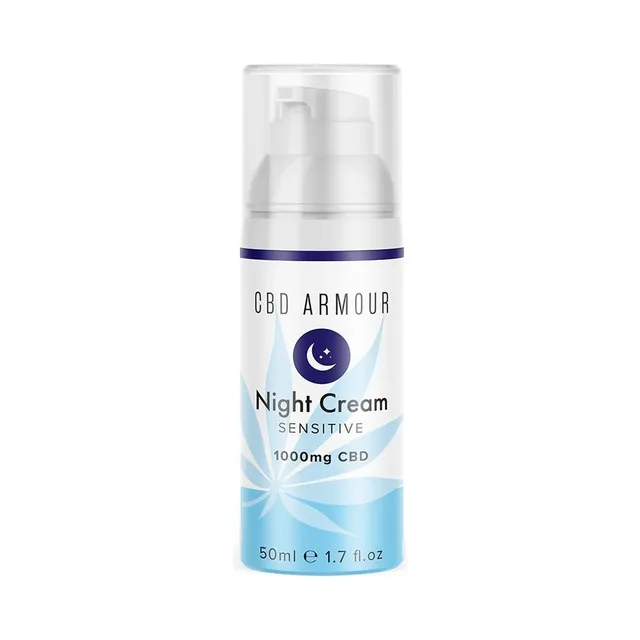
CBD Armour · sold by CBD Armour
CBD Armour CBD Night Cream
- Size
- one jar or item
- CBD stated
- not stated by the brand
- Price per mg
- n/a, no mg stated
£14.99price read 23 Nov 2026
Ingredients as listed
Aqua, Glyceryl Stearate SE, Caprylic/Capric Triglyceride, Caprylyl Caprylate/Caprate, Cetearyl Alcohol, Glycerin, Olus Oil, Persea Gratissima (Avocado) Oil, Simmondsia Chinensis (Jojoba) Seed Oil, Tocopherol, Dimethicone, Prunus Serrulata Flower Extract, Sodium Carrageenan, Phenetyl Alcohol, Sea Salt, Helichrysum Italicum Extract, Panthenol, Tocopheryl Acetate, Sodium Polyacrylate, Ethylhexylglycerin, Phenoxyethanol, Citric Acid, Cannabis Sativa L.
Ad · we earn a commission if you buy
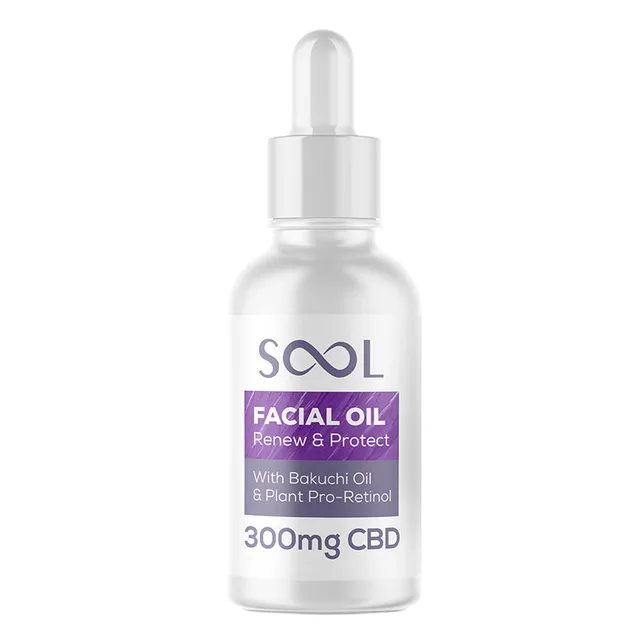
SOOL · sold by The CBD Hut
SOOL CBD Facial Oil 300mg with Bakuchiol
- Size
- 30 ml
- CBD stated
- 300 mg
- Strength
- 10 mg per ml
- Price per mg
- 11p
£32.99price read 23 Nov 2026
Ingredients as listed
Prunus Armeniaca Kernel Oil, Coco-Caprylate/Caprate, Squalane, Cucumis Sativus Seed Oil, Cannabis Sativa Seed Oil, Macadamia Integrifolia Seed Oil, Avena Sativa Kernel Oil, Helianthus Annuus Seed Oil, Caprylic/Capric Triglyceride, Bakuchiol, Cannabis Sativa Leaf Extract, Oleic Acid, Tocopherol, Inonotus Obliquus Extract, Terminalia Arjuna Bark Extract, Retinyl Sunflowerseedate, Laminaria Ochroleuca Extract, Rosmarinus Officinalis Leaf Extract, Lecithin
Ad · we earn a commission if you buy
We earn a commission on sales made through links on this page, which is why the cards above are marked as advertising; it does not change what we write about the rules. How it works is on our advertising page, and how we compare is on our method page. Prices in the cards were read on 22 November 2026 (Black Friday week; shops change prices often). The legal sources were read on 18 and 22 November 2026, and the rules can change.
Questions
Are CBD creams legal in the UK?
CBD creams are sold in the UK as cosmetics, and cosmetics have their own rules: a responsible person in the UK, a notification before sale, a proper ingredient list and no misleading claims. We do not describe any cosmetic as legal, approved or authorised, because no official page we read does so for CBD in cosmetics, and some questions about the source of the CBD remain open.
Is a CBD cream on the Food Standards Agency list?
No. The FSA's list is about CBD food products. Cosmetics are not on it. A cream that carries a note about the FSA's daily intake advice is quoting guidance for food, not a rule for creams.
Can a CBD cream contain THC?
A product containing THC is a controlled drug under the Misuse of Drugs Act 1971 unless it qualifies as an exempt product, and one condition is that no component part contains more than 1mg of the controlled drug. Responsible brands publish lab reports so that you can check. We ask for them and do not list a brand that cannot supply one.
Does Northern Ireland have the same rules?
No. Great Britain follows the retained version of the cosmetics regulation; Northern Ireland follows the EU version. What we say on this page applies to Great Britain.
Why does your site never say what a CBD cream does for the body?
Because under the UK rules a cosmetic is limited to cosmetic claims, and a claim to address a medical condition makes a product a medicine. The advertising regulator has ruled against CBD skincare adverts for exactly this reason, and a disclaimer did not save them. We describe format, size, stated mg, ingredients and price, and nothing more.
Can I rely on this page as legal advice?
No. It is an editor's reading of official sources on 22 November 2026, with links so you can read them yourself. If you run a business or you are unsure about a specific product, speak to a solicitor or to Trading Standards.
How can I check a brand is meeting its obligations?
Look for the responsible person's name and UK address on the pack, ask the brand to confirm in writing that the product is notified, and ask for the lab report. You cannot search the notification database yourself.
Sources
- Cosmetic Products Regulation, article 4 (responsible person) (read 22 November 2026)
- Cosmetic Products Regulation, article 13 (notification) (read 22 November 2026)
- Cosmetic Products Regulation, article 19 (labelling) (read 22 November 2026)
- Cosmetic Products Regulation, article 20 (product claims) (read 22 November 2026)
- Cosmetic Products Regulation, annex II (prohibited substances) (read 22 November 2026)
- Making cosmetic products available to consumers in Great Britain (GOV.UK) (read 22 November 2026)
- Submit cosmetic product notifications (GOV.UK) (read 22 November 2026)
- Misuse of Drugs Act 1971, Schedule 2 (read 18 November 2026)
- Misuse of Drugs Regulations 2001, regulation 2 (exempt products) (read 18 November 2026)
- Home Office: drug licensing factsheet on cannabis, CBD and other cannabinoids (read 18 November 2026)
- MHRA statement on products containing cannabidiol (CBD) (read 22 November 2026)
- ASA: CBD containing products (advice) (read 22 November 2026)
- ASA ruling on Legacy 369 Ltd, 26 April 2023 (read 22 November 2026)
- CAP Code, section 12 (medicinal claims and beauty products) (read 22 November 2026)
- Digital Markets, Competition and Consumers Act 2024, Schedule 20 (read 22 November 2026)
- Digital Markets, Competition and Consumers Act 2024, section 230 (read 22 November 2026)
- CMA208: Fake reviews guidance (read 22 November 2026)
- Product pages and prices: The CBD Hut, Dr Watson CBD, CBD Armour, read on 23 November 2026.